Can You Make Air Push Back?
A hands-on STEAM experience for Year 4-6
What if you could feel the invisible force pressing on everything around you? Discover how air pressure moves objects, powers machines and lifts things off the ground, through hands-on, scientific investigation.
Air Is Invisible. Its Effects Aren’t.
We breathe air every day, but few have ever stopped to think about what it’s actually doing. What makes a ball float, a straw work or a plane fly? How can something we can’t see push things around?
In KaBoom, children explore the invisible force of air pressure through experiments they can see, feel and hear, and then build a working pneumatic system of their own.
The challenge: can you make air do the work?
What will children discover?
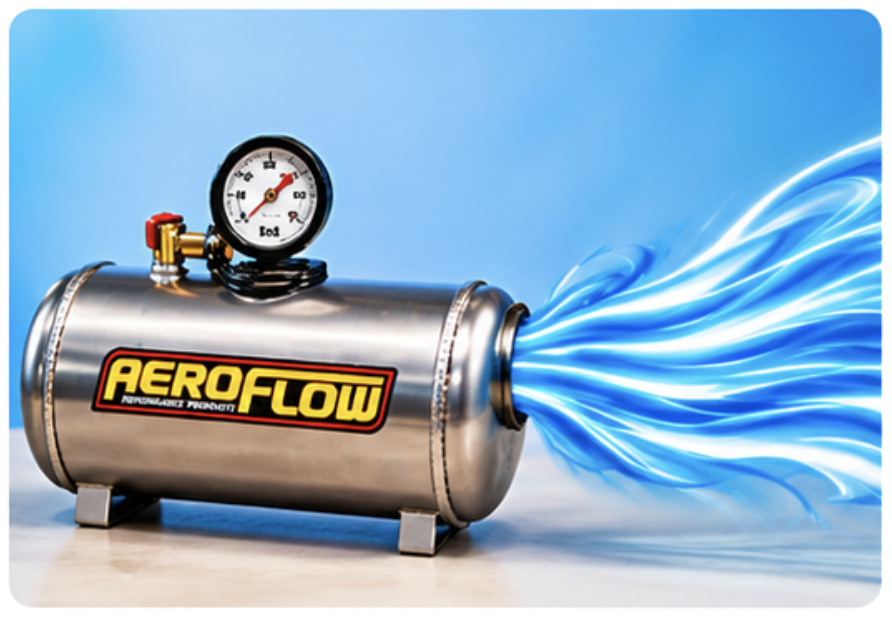
Pressure in Action
Can we make the invisible visible?
Children run experiments that reveal how air pressure pushes on everything around us, from crushing and lifting to holding things in place.
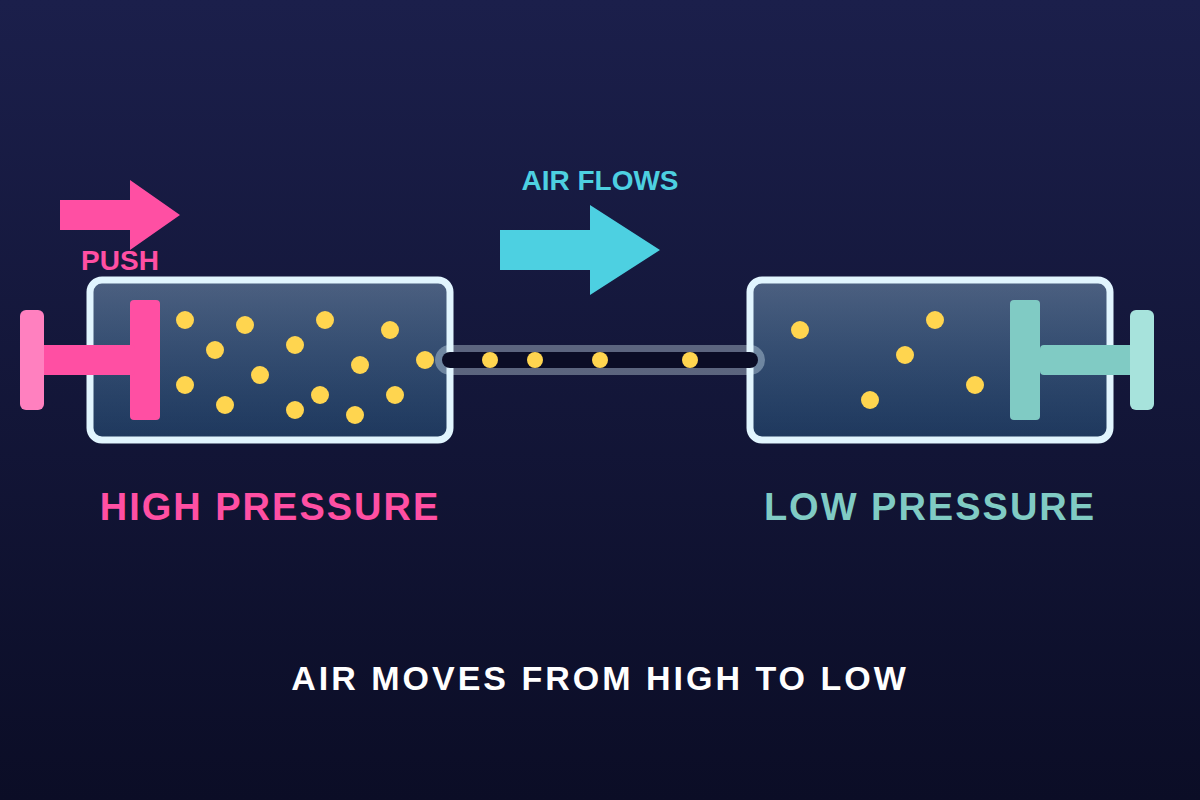
Pressure Differences
Why does air move?
Using a hands-on pneumatic system, children investigate how differences in pressure make air flow and objects move, and then design, build and test their own.
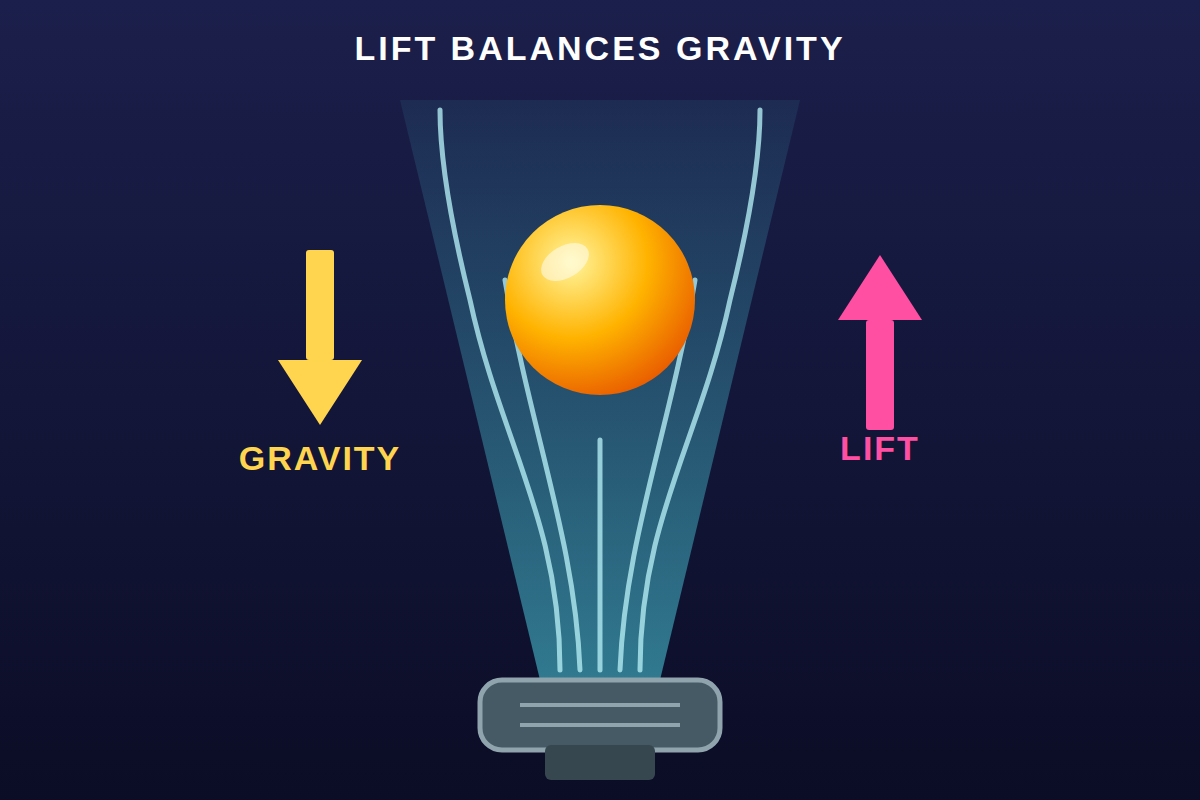
Lift and Flight
How can air hold something up?
Children explore the relationship between air pressure, gravity and lift, and discover Bernoulli’s principle through hovering-ball experiments.
NESA Curriculum Aligned
Seeing Sound supports the NSW Science and Technology K–6 curriculum for Stage 2 and Stage 3 students.
Through hands-on investigations into vibration and sound, students make slime dance using a loudspeaker, explore the relationship between amplitude and loudness, and use microphones and oscilloscopes to observe and measure sound waves.
Stage 2 — Years 3–4
ST2-1WS-S — Working Scientifically: Students investigate vibration and sound, make observations, compare measurements and communicate findings.
ST2-4LW-S — Living World: Students observe and describe the properties and behaviour of materials, including the changing behaviour of non-Newtonian slime.
Stage 3 — Years 5–6
ST3-1WS-S — Working Scientifically: Students conduct investigations, collect and interpret measurements, identify patterns and communicate conclusions.
ST3-8PW-ST — Physical World: Students investigate sound as a physical phenomenon, exploring how vibrations produce sound and how changes in amplitude and frequency affect loudness and pitch.
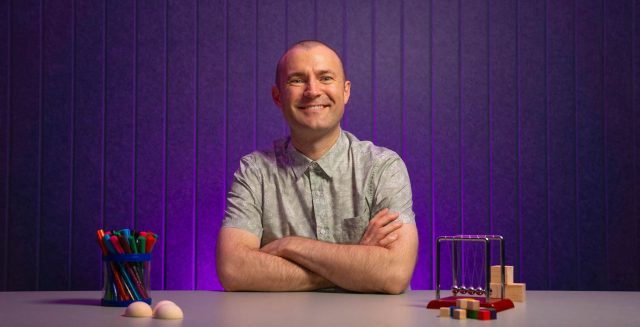
Jeremy brings a rich background in programming, sound engineering, physics presentation and science education—but the real teacher in these workshops is curiosity.
The goal isn’t simply to give children more facts.
It’s to help them discover:
“I can figure this out.”
✨ Find the miracles in the mundane.
🔬 See the science hiding in plain sight.
💡 Discover that ideas, reason and imagination can change what is possible.